Danube Wave Cake
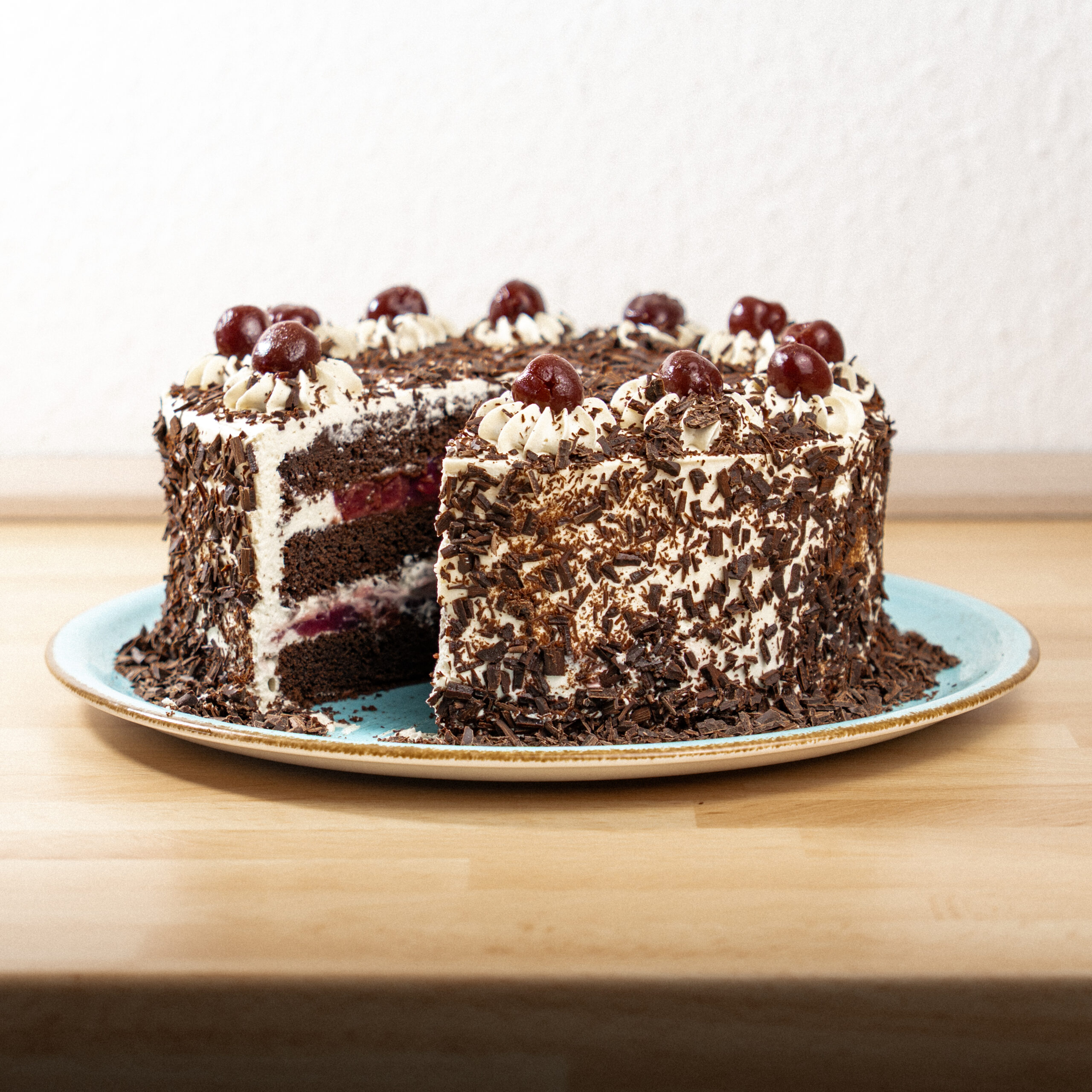
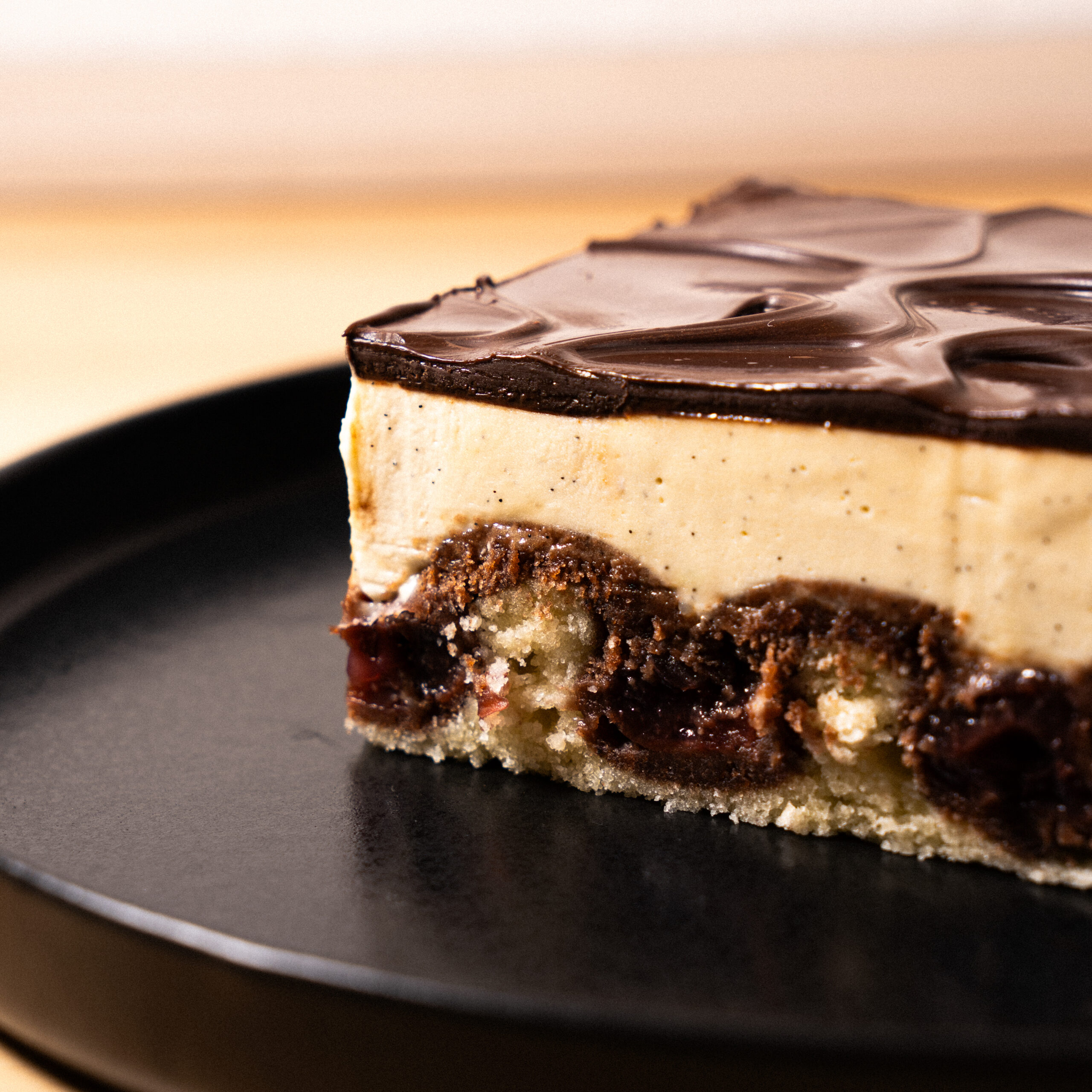
A nostalgic sheet cake with light and cocoa batters, baked with cherries into soft “waves” and finished with vanilla custard cream and chocolate glaze – all the classic flavours, now fully vegan.
Servings: 16 pieces
Notes
Not every oat milk will work
Not every plant-based milk alternative can be thickened with cornstarch. Some types of milk, especially oat and rice milk, may contain an enzyme called amylase. This enzyme breaks down starch into glucose and maltose, preventing the milk from thickening. This is why I use Alpro Not Milk 3.8%, as it doesn’t contain amylase.Ingredients
Cake
- 250 g Margarine
- 300 g Sugar
- 20 g Vanilla sugar
- 4 g Salt
- 20 g Baking powder
- 500 g Flour
- 400 g Soy milk
- 20 g Cocoa powder
- 10 g Soy milk
- 1 jar Sour cherries
- 10 g Cornstarch
Pudding Cream
- 400 g vMilk Oat, Alpro Not Milk
- 100 g vMilk Oat, Alpro Not Milk
- 2 Vanilla pods
- 60 g Sugar white
- 50 g Cornstarch
- 160 g vButter Flora or Violife
- 90 g vButter Flora or Violife
Chocolate Layer
- 200 g Dark chocolate 55%
- 20 g Oil sunflower or rapeseed
Equipment
- 1 Standmixer KitchenAid Artisan
- 1 Whisk Attachment
- 1 Sieve
- 1 Baking Tray 30x40x4 cm
- 1 Saucepan small
- 1 Bowl small
- 1 Whisk
- 1 Hand Mixer optional
- 2 Silicone Spatulas
Instructions
Cake
- Pour the jar of cherries into a sieve and let the excess liquid drip off.
- Preheat the oven to 180°C, top/bottom heat.
- In a mixing bowl, whisk together margarine, sugar, vanilla sugar, and salt on KitchenAid Speed 8 (KS8) with the whisk attachment for 8-10 minutes, or until the mixture becomes almost white and very airy.
- In a separate bowl, sift together the flour and baking powder.
- Set the Standmixer to a slower speed (KS4) and gradually add spoonfuls of flour, alternating with a splash of soy milk. Once the flour and milk are incorporated, scrape the sides of the mixing bowl with a spatula and mix for 30 seconds on a faster speed (KS6).
- Pour 2/3 of the batter into a baking tray lined with parchment paper and spread it evenly.
- Sift cocoa powder into the batter and add the splash of 10g soy milk. Mix on medium speed (KS6) until the cocoa powder is incorporated, scrape the sides of the bowl, and mix again for a few seconds. Don’t overmix the batter.
- Pour the remaining batter onto the baking tray, spread it evenly, and distribute the cherries on top.
- Bake the cake for 35 to 40 minutes, or until a wooden skewer comes out clean.
- Let the cake cool down while continuing with the pudding cream.
Pudding Cream
- Place 400g of oat milk in a small saucepan with a lid. Scrape out the seeds of two vanilla pods and add them, along with the vanilla pods themselves, to the milk.
- Add the sugar and infuse over the lowest heat setting on your stove for 30 minutes, with the lid on.
- In a bowl, mix the remaining milk with cornstarch until smooth.
- Set the stove to medium heat and bring the milk to a boil. Add the starch-milk mixture while stirring constantly. Keep stirring until the mixture starts bubbling and thickens at around 74°C.
- Remove the pot from the heat and stir in 160g of butter. Cover the surface directly with cling film to prevent the pudding from forming a skin while cooling. Let it cool at room temperature for around 2 hours.
- In a mixing bowl, add the remaining 90g of butter and beat it with a hand mixer or stand mixer until softened.
- Remove the vanilla pods from the pudding and add it to the mixing bowl. Whisk everything together until it forms a smooth cream.
- Spread the pudding cream onto the baked cake and level it with a spatula.
- Cover the baking tin with cling film and rest it in the fridge overnight or for at least 4 hours.
Chocolate Layer
- Break or cut the dark chocolate into small pieces and put it together with the oil in a microwave-proof bowl.
- Microwave on a low setting, like 600-800 watts, in 15-second increments. When you see the chocolate starting to melt, stir with a spatula for a few seconds. If there are still solid pieces, heat another 15 seconds and check again. Be careful not to overheat parts of the chocolate, as the protein can overheat and smell burnt. If you have a thermometer, don’t go above 50 °C.
- When the chocolate layer is melted to around 40-45 °C, pour it onto the cooled pudding cream. Be quick to spread it before the chocolate starts to harden again. You can use a spatula or fork to create a classic wave-like design to finish the chocolate layer.
or